Those of us using computers in SAF camps will have discovered that one can't log in to blogger.com from their computers. While the fields for entering one's user name and password are visible, the login button has somehow been disabled.
There is a way around this little obstacle: when leaving comments in a blog, one has the option of logging in first and then publishing the comment under one's username. Once that is done, simply return to the main Blogger page and one will find oneself at the Dashboard!
04 April 2006


01 April 2006
April Fools!
The new month brings new tidings, new decisions and the consequences thereof. I've decided against studying overseas and have applied to NUS to study Law. Hopefully all will go well.
27 March 2006
Cheesy Pick-up Lines
Don't ask why, but here are some really bad ones!
- "Your name must be Sherry... 'cause you're so intoxicating!"
- (Sprinkle water on the lady) "I'm sorry, but you're just too hot."
- "Do you mind?" (Woman: "Huh?") "You are distracting me with your beauty!"
- "I hope you brought crutches because I've gone all weak on seeing you."
- "Do you sell insurance?" (Woman: "No...") "Well I should've bought some because I'm dying to know you."
- "Look out the window at the sky!" (Woman: "Well yeah?") "Don't you see something missing? Your starry eyes...."
25 March 2006
O? Positive.
Went to bleed myself again, this time with a friend, my army buddy Amrish. Despite it being a Saturday, there was quite a crowd at the blood bank. Everything proceeded much faster than before: no more mollycoddling. But thank goodness they still used anaesthetic. The nurses still have the same warped sense of humour: upon asking if there would be anaesthesia applied, she replied with a hopeful smile, 'well yes, unless you don't want any?' And why is it that everytime I wince (okay, squirm) at being stuck, there's always an old veteran donor across the room smirking at me?
Overheard when the lifeblood was being drained from my veins:
Nurse: You can use this coupon to redeem a drink and snack outside.
Donor: Do you have any spirits?
N: No, not these days at least. We used to give donors Guinness Stout thirty years ago, because there were so few of them then. But not anymore, not after having problems with some getting drunk.
D: Pity.
Well one can imagine that losing a litre of blood and making up for it with a pint of beer is not likely to result in sobriety!
Overheard when the lifeblood was being drained from my veins:
Nurse: You can use this coupon to redeem a drink and snack outside.
Donor: Do you have any spirits?
N: No, not these days at least. We used to give donors Guinness Stout thirty years ago, because there were so few of them then. But not anymore, not after having problems with some getting drunk.
D: Pity.
Well one can imagine that losing a litre of blood and making up for it with a pint of beer is not likely to result in sobriety!
19 March 2006
Porridge in church

More porridge!

Porridge!
Rather coincidentally (with the great porridge watch) had porridge in church today. Yummy thick congee with bits of chicken!
15 March 2006
Parritch
" '...Ay,' he continued, as soon as he had ousted me from the stool and spoon, 'they're fine, halesome food -- they're grand food, parritch.' He murmured a little grace to himself and fell to. 'Your father was very fond of his meat, I mind; he was a hearty, if not a good eater; but as for me, I could never do mair than pyke at food.' " -- RL Stevenson, Kidnapped chap. i.
Nasi sudah menjadi bubur -- Malay idiom ('rice has become porridge') referring to something which has been done and cannot be retracted.
The BBC Magazine Monitor has started a new series called Porridge Watch, to highlight instances of porridge being mentioned in the media, after an observation that porridge is mentioned more often in the press than one would expect (more than cornflakes, for instance). Some readers have written in with their own porridge observations, while the monitor staff have been busy with their own updates. Upon reading their observations, I too have been convinced that a conspiracy is afoot to promote porridge in the UK media. A fraternity of grain-wholesalers, perhaps, who wish to drive up the consumption of grains and cereals for some nefarious political purpose? Or the work of an evil biotechnologist who has seeded fields around the world with allergenic strains of oats and rice, hoping to cash in on a cure that only he possesses?
The word porridge itself ('parritch' is a variant) throws some clue on its method of preparation, having been derived from 'pottage', i.e. prepared in a pot. Various kinds of porridge exist, depending on the grain used to make it, and the wateriness of the preparation. Gruel, for instance, refers to thin, watery porridge. It isn't surprising then that the word gruel also refers to torture or punishment ('gruelling'). Congee, on the other hand, is thick and viscose, having been boiled until the rice grains break apart. Porridges can be sweet, such as the dessert pulut hitam, made from glutinous black rice boiled with sugar and topped off with coconut milk, or savoury, like Chinese congee. Aside from water, milk is also used to make porridge, e.g. in the oat porridge that was the staple food in Scotland. The high starch content of porridge, and its ease of cooking, makes it very convenient for the cook and the consumer: it doesn't require elaborate effort, and it supplies abundant carbohydrates. Its soft, semisolid consistency makes it easy to eat, and partly explains its being fed to both very young children and very old people.
The above might serve to explain why porridge might become popular again: its versatility makes it an excellent base recipe on which to pile elaborations and additions, its reputation as poor-man's simple food is antithetical to highly-processed and industrially-complicated food choices that the modern consumer is inundated with, while its history might invoke wistful nostalgia of simpler times past or happy childhoods bespattered with lumpy porridge. Who knows, it might just be the next bubble tea.
Nasi sudah menjadi bubur -- Malay idiom ('rice has become porridge') referring to something which has been done and cannot be retracted.
The BBC Magazine Monitor has started a new series called Porridge Watch, to highlight instances of porridge being mentioned in the media, after an observation that porridge is mentioned more often in the press than one would expect (more than cornflakes, for instance). Some readers have written in with their own porridge observations, while the monitor staff have been busy with their own updates. Upon reading their observations, I too have been convinced that a conspiracy is afoot to promote porridge in the UK media. A fraternity of grain-wholesalers, perhaps, who wish to drive up the consumption of grains and cereals for some nefarious political purpose? Or the work of an evil biotechnologist who has seeded fields around the world with allergenic strains of oats and rice, hoping to cash in on a cure that only he possesses?
The word porridge itself ('parritch' is a variant) throws some clue on its method of preparation, having been derived from 'pottage', i.e. prepared in a pot. Various kinds of porridge exist, depending on the grain used to make it, and the wateriness of the preparation. Gruel, for instance, refers to thin, watery porridge. It isn't surprising then that the word gruel also refers to torture or punishment ('gruelling'). Congee, on the other hand, is thick and viscose, having been boiled until the rice grains break apart. Porridges can be sweet, such as the dessert pulut hitam, made from glutinous black rice boiled with sugar and topped off with coconut milk, or savoury, like Chinese congee. Aside from water, milk is also used to make porridge, e.g. in the oat porridge that was the staple food in Scotland. The high starch content of porridge, and its ease of cooking, makes it very convenient for the cook and the consumer: it doesn't require elaborate effort, and it supplies abundant carbohydrates. Its soft, semisolid consistency makes it easy to eat, and partly explains its being fed to both very young children and very old people.
The above might serve to explain why porridge might become popular again: its versatility makes it an excellent base recipe on which to pile elaborations and additions, its reputation as poor-man's simple food is antithetical to highly-processed and industrially-complicated food choices that the modern consumer is inundated with, while its history might invoke wistful nostalgia of simpler times past or happy childhoods bespattered with lumpy porridge. Who knows, it might just be the next bubble tea.
12 March 2006
Fulminate
My baby left me for a blue banana,
my baby left me 'cause they're oh-so-rare.
She said, "well Brandons they're a dime a dozen,
but blue bananas I have none to spare."
my baby left me 'cause they're oh-so-rare.
She said, "well Brandons they're a dime a dozen,
but blue bananas I have none to spare."
11 March 2006
Some Things
A young Muslim girl's family in India is facing opposition from their local mosque committee because she practises classical Indian dance. From the article, a whole host of issues seem to be involved. Ostensibly, it is the Hindu roots and religious content of Indian dance that make the mosque committee unhappy, but gender might be another reason for their cold shoulder, since the girl not only performs well in dance, but is an excellent student in school. Furthermore, the committee's argument that the girl's family falls outside their mosque's locality might point to some sort of local conflict. Fortunately, her parents are supportive of her endeavour, and the girl herself has an optimistic outlook. It's sad that people's prejudices make them reject talent that they should be celebrating.
04 March 2006
Beware the Ides of March
In 11 days we shall be celebrating the 2050th anniversary of the assassination of Julius Caesar in 44 BC. However, the difference between the Julian and Gregorian calendars means that the actual anniversary should be commemorated 13 days after the 15th of March, but why toy with tradition?
"Caesar Et tu, Brute? -- Then fall, Caesar!
Cinna Liberty! Freedom! Tyranny is dead!
Run hence, proclaim, cry it about the streets.
Cassius Some to the common pulpits, and cry out
'Liberty, freedom and enfranchisment!'" -- Julius Caesar, iii.1
"Mark Antony Friends, Romans, countrymen, lend me your ears;
I come to bury Caesar, not to praise him.
The evil that men do lives after them;
So let it be with Ceasar. The noble Brutus
Hath told you Caesar was ambitious,
If it were so, it was a grievous fault;
And grievously hath Caesar answer'd it..." -- Julius Caesar, iii.2
http://news.bbc.co.uk/2/hi/uk_news/magazine/4765882.stm
"No one is so strong as to be unperturbed by the unexpected." -- On the Gallic Wars, xi.39
"Caesar Et tu, Brute? -- Then fall, Caesar!
Cinna Liberty! Freedom! Tyranny is dead!
Run hence, proclaim, cry it about the streets.
Cassius Some to the common pulpits, and cry out
'Liberty, freedom and enfranchisment!'" -- Julius Caesar, iii.1
"Mark Antony Friends, Romans, countrymen, lend me your ears;
I come to bury Caesar, not to praise him.
The evil that men do lives after them;
So let it be with Ceasar. The noble Brutus
Hath told you Caesar was ambitious,
If it were so, it was a grievous fault;
And grievously hath Caesar answer'd it..." -- Julius Caesar, iii.2
http://news.bbc.co.uk/2/hi/uk_news/magazine/4765882.stm
"No one is so strong as to be unperturbed by the unexpected." -- On the Gallic Wars, xi.39
24 February 2006
Hey All You Bloody-Minded
Hi bloody folks, some students at RGS are holding a blood donation drive at their school next Wednesday:
RGSS Blood Donation Drive
Date: 1 March 2006 Venue: K.S Chee Theatre
Time: 2.00 to 6.00pm Raffles Girls' School (Secondary)
20 Anderson Road Singapore 259978
If you're tired of bleeding your wallet dry at Orchard Road, why not make a short detour down to their school to bleed yourself dry?
The Australians have also come up with something bloody amusing for their tourism campaign this year: So Where The Bloody Hell Are You?
RGSS Blood Donation Drive
Date: 1 March 2006 Venue: K.S Chee Theatre
Time: 2.00 to 6.00pm Raffles Girls' School (Secondary)
20 Anderson Road Singapore 259978
If you're tired of bleeding your wallet dry at Orchard Road, why not make a short detour down to their school to bleed yourself dry?
The Australians have also come up with something bloody amusing for their tourism campaign this year: So Where The Bloody Hell Are You?
19 February 2006
New Bookshelf
My new bookshelf is up and looking pretty! No more messy side table in my room piled up dangerously with books and notes: Billy Bookcase the Second is accomodating enough to take up the burden.
Photos:

Messy Side Table (Before)

Gap (After)

Billy Bookcase II (he's the white one, and a bit taller than that but his top tier is out of the picture.)
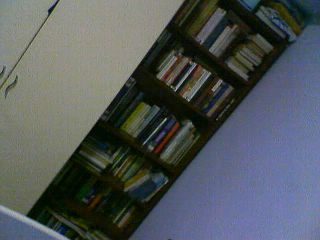
Billy Bookcase I
Photos:

Messy Side Table (Before)

Gap (After)
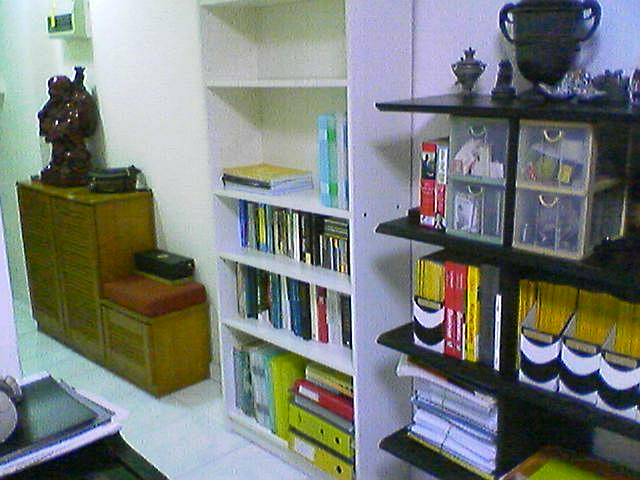
Billy Bookcase II (he's the white one, and a bit taller than that but his top tier is out of the picture.)

Billy Bookcase I
27 January 2006
Shameless Publicity
My sister has recently had her wuxia novel published, and it's out in shops now! It's titled Shaonian Xiake Liu Mailin, and is published by Lingzhi Media. Get your own copy soon!
10 January 2006
Fall of the House of Hwang
Word is out that Hwang Woo-Suk's cloning work was faked, according to a panel convened by his (former) employer, Seoul National University. The press release from the University was released on their website today. It is useful to read where the work went wrong, but chilling also because of the possibility that so much of our so-called scientific progress is flim-flammery hidden under fluff. For every big scandal there are probably dozens more smaller fish that evaded the net.
What concerns me, though, is that the panel was so quick in ascertaining Hwang's guilt. One month seems awfully short to do all the tests they did in there, though of course I have no idea how much manpower the panel had at its disposal. As with all matters where emotional investment is at stake (given Hwang's former hero-status in South Korea) there is danger of a witch-hunt, of needing to pin blame and to destroy utterly the blamed in order to blunt the shame of mistaken admiration. There might be, too, an element of professional jealousy involved, given that Hwang dominated the field (and funding) in which the scientists that now make up the panel work in. Could it not be possible that they might find some delicacy in destroying his career, in striking him while he is down?
Regardless of these concerns, though, Hwang's career is over; he might have difficulty even teaching high school science in Korea. It is unlikely that anyone will let him rest in Korea; he would probably have to leave the country to continue his life. In an era where life scientists are seen as the high priests of a rational religion, feted and nourished by the state, which is afraid of angering the gods of that religion by failing to do so, we should not forget that scientists are as human as any one of us, susceptible to the same temptations, tempers, and treachery. It is very tempting to hero-worship someone who does well in something we believe will bring us good fortune, to put him or her on a pedestal and shower him with tributes. But very few people can handle being a hero with good grace. That is the reason why heroes are best taken from antiquity, because we might be crushed when they fall from grace and we are still standing beneath the pedestal looking up, slack-jawed and immobile.
What concerns me, though, is that the panel was so quick in ascertaining Hwang's guilt. One month seems awfully short to do all the tests they did in there, though of course I have no idea how much manpower the panel had at its disposal. As with all matters where emotional investment is at stake (given Hwang's former hero-status in South Korea) there is danger of a witch-hunt, of needing to pin blame and to destroy utterly the blamed in order to blunt the shame of mistaken admiration. There might be, too, an element of professional jealousy involved, given that Hwang dominated the field (and funding) in which the scientists that now make up the panel work in. Could it not be possible that they might find some delicacy in destroying his career, in striking him while he is down?
Regardless of these concerns, though, Hwang's career is over; he might have difficulty even teaching high school science in Korea. It is unlikely that anyone will let him rest in Korea; he would probably have to leave the country to continue his life. In an era where life scientists are seen as the high priests of a rational religion, feted and nourished by the state, which is afraid of angering the gods of that religion by failing to do so, we should not forget that scientists are as human as any one of us, susceptible to the same temptations, tempers, and treachery. It is very tempting to hero-worship someone who does well in something we believe will bring us good fortune, to put him or her on a pedestal and shower him with tributes. But very few people can handle being a hero with good grace. That is the reason why heroes are best taken from antiquity, because we might be crushed when they fall from grace and we are still standing beneath the pedestal looking up, slack-jawed and immobile.
Blood in the Streets
Harold Pinter, in his Nobel Lecture quoted a poem by Pablo Neruda which I think is worth reading in full:
I Explain a Few Things (Explico algunas cosas)
You will ask: And where are the lilacs?
And teh metaphysical blanket of poppies?
And the rain that often struck
your words filling them
with holes and birds?
I am going to tell you all that is happening to me.
I lived in a quarter
of Madrid, with bells,
with clocks, with trees.
From there one could see
the lean face of Spain
like an ocean of leather.
My house was called
the house of flowers, because it was bursting
everywhere with geraniums: it was
a fine house,
with dogs and children.
Raul, do you remember?
Do you remember, Rafael?
Federico, do you remember
under the ground,
do you remember my house with balconies where
June light smothered flowers in your mouth?
Brother, brother!
Everything
was great shouting, salty goods,
heaps of throbbing bread,
markets of my Arguelles quarter with its statue
like a pale inkwell among the haddock:
the olive oil reached the ladles,
a deep throbbing
of feet and hands filled the streets,
meters, liters, sharp
essence of life,
fish piled up,
pattern of roofs with cold sun on which
the vane grows weary,
frenzied fine ivory of the potatoes,
tomatoes stretching to the sea.
And one morning all was aflame
and one morning the fires
came out of the earth
devouring people,
and from then on fire,
gunpowder from then on,
and from then on blood.
Bandits with airplanes and with Moors,
bandits with rings and duchesses,
bandits with black-robed friars blessing
came through the air to kill children,
and through the streets the blood of the children
ran simply, like children's blood.
Jackals that the jackal would spurn,
stones that the dry thistle would bite spitting,
vipers that vipers would abhor!
Facing you I have seen the blood
of Spain rise up
to drown you in a single wave
of pride and knives!
Treacherous
generals:
look at my dead house,
look at broken Spain:
but from each dead house comes burning metal
instead of flowers,
but from each hollow of Spain
Spain comes forth,
but from each dead child comes a gun with eyes,
but from each crime are born bullets
that will one day seek out in you
where the heart lies.
You will ask: why does your poetry
not speak to us of sleep, of the leaves,
of the great volcanoes of your native land?
Come and see the blood in the streets,
come and see
the blood in the streets,
come and see the blood
in the streets!
trans. Donald D. Walsh
from Spain in our Hearts (Espana en al corazon)
I Explain a Few Things (Explico algunas cosas)
You will ask: And where are the lilacs?
And teh metaphysical blanket of poppies?
And the rain that often struck
your words filling them
with holes and birds?
I am going to tell you all that is happening to me.
I lived in a quarter
of Madrid, with bells,
with clocks, with trees.
From there one could see
the lean face of Spain
like an ocean of leather.
My house was called
the house of flowers, because it was bursting
everywhere with geraniums: it was
a fine house,
with dogs and children.
Raul, do you remember?
Do you remember, Rafael?
Federico, do you remember
under the ground,
do you remember my house with balconies where
June light smothered flowers in your mouth?
Brother, brother!
Everything
was great shouting, salty goods,
heaps of throbbing bread,
markets of my Arguelles quarter with its statue
like a pale inkwell among the haddock:
the olive oil reached the ladles,
a deep throbbing
of feet and hands filled the streets,
meters, liters, sharp
essence of life,
fish piled up,
pattern of roofs with cold sun on which
the vane grows weary,
frenzied fine ivory of the potatoes,
tomatoes stretching to the sea.
And one morning all was aflame
and one morning the fires
came out of the earth
devouring people,
and from then on fire,
gunpowder from then on,
and from then on blood.
Bandits with airplanes and with Moors,
bandits with rings and duchesses,
bandits with black-robed friars blessing
came through the air to kill children,
and through the streets the blood of the children
ran simply, like children's blood.
Jackals that the jackal would spurn,
stones that the dry thistle would bite spitting,
vipers that vipers would abhor!
Facing you I have seen the blood
of Spain rise up
to drown you in a single wave
of pride and knives!
Treacherous
generals:
look at my dead house,
look at broken Spain:
but from each dead house comes burning metal
instead of flowers,
but from each hollow of Spain
Spain comes forth,
but from each dead child comes a gun with eyes,
but from each crime are born bullets
that will one day seek out in you
where the heart lies.
You will ask: why does your poetry
not speak to us of sleep, of the leaves,
of the great volcanoes of your native land?
Come and see the blood in the streets,
come and see
the blood in the streets,
come and see the blood
in the streets!
trans. Donald D. Walsh
from Spain in our Hearts (Espana en al corazon)
07 January 2006
The New Year and Beyond
Finally, I can tell people who ask that I'll be going to college next year, rather than the clunky phrase 'the year after next, viz. 2007,' which requires some explanation. I'm glad to leave 2005, with all its trials, tribulations, and griefs behind, and to look forward to what lies ahead. Most people maintain their sanity, after all, by putting their lot in what is to come, rather than what has already passed, because we are helpless to change the latter while the former at least offers us the illusion that we have some degree of control over it.
In all honesty, I don't know what I want to do with this year. One year's service in the army is over and at the rate things are going, the remaining year shall be over without too much effort. Most of my good-intentioned resolutions for the new year that I made at the beginning of last year have gone unfulfilled: it's hard to find the discipline to accomplish them, and for all the excuses that I might muster, they all eventually fail to assail the fact that it is my own shortcoming that has thwarted them. This year I shall not make resolutions that I cannot keep, nor promises that I cannot honour, because promises broken to oneself diminishes one's standing in one's own eyes, rather than that of others, a far more biting diminution. My fate is not in my own hands, this I accept. Yet it would be perverse to use that to justify idle inaction. As before, I shall strive, though fraught with inadequacy and error, to do what is right, and to better the happiness that is mine and others'. That alone will require a substantial portion of my energies. The highest commendation I can imagine is that it will be energy well spent, and not squandered.
Here's to a happy new year, a blessed one, and a fulfilling one for all. I promise my next update will be less sentimental: this promise I am unlikely to break.
In all honesty, I don't know what I want to do with this year. One year's service in the army is over and at the rate things are going, the remaining year shall be over without too much effort. Most of my good-intentioned resolutions for the new year that I made at the beginning of last year have gone unfulfilled: it's hard to find the discipline to accomplish them, and for all the excuses that I might muster, they all eventually fail to assail the fact that it is my own shortcoming that has thwarted them. This year I shall not make resolutions that I cannot keep, nor promises that I cannot honour, because promises broken to oneself diminishes one's standing in one's own eyes, rather than that of others, a far more biting diminution. My fate is not in my own hands, this I accept. Yet it would be perverse to use that to justify idle inaction. As before, I shall strive, though fraught with inadequacy and error, to do what is right, and to better the happiness that is mine and others'. That alone will require a substantial portion of my energies. The highest commendation I can imagine is that it will be energy well spent, and not squandered.
Here's to a happy new year, a blessed one, and a fulfilling one for all. I promise my next update will be less sentimental: this promise I am unlikely to break.
23 December 2005
On Desanguination
Feeling moved by the spirit of Christmas to give something to someone other than myself, I went down to the blood bank at the Health Sciences Authority today to give blood. They obviously value donors: from the very start to finish it was a charm offensive all the way. I've never had so many nurses smile at me before. I bet even when I was an infant-in-arms they scowled at me. The receptionist was unsuually cheerful, calling everyone 'dearie' and gleefully handing out forms to fill in. Of course, given the recent cases of men being charged for donating HIV-tainted blood, all this charm has a dagger behind its back should you compromise the system. And all the literature (innumerable pamphlets that would later take turns to slide off my lap when I reclined on the chair) stresses this point, while never failing to be enthusingly grateful for the volunteer's donation.
But all that aside, my other primary reason for going down was to accustom myself to the feeling of a canula into my vein in preparation for the dreaded medic course I'll have to go for next month. With respect to sharp objects poking into me and the sight of blood, I was not to be disappointed. After the medical interview (wherein I found that I had gained 5 kilograms from the last time I checked), a nurse came (or rather I went to a nurse) to do a haemoglobin test, which consisted of stapling my finger to draw a drop of blood into a capillary tube and then shaking that drop into a beaker of blue solution which already had several other drops of blood floating within. The nurse who performed this procedure was an extremely pale lady, and it didn't help her complexion that she wore a light yellow blouse with a white disposable medical gown over it. When she put on her white latex gloves she seemed almost bloodless. After conducting the test she retired again to a small, dark anteroom. One wonders.
In the donation room itself were rows of reclining chairs lined up, with a few people already giving blood. I was seated down and a few nurses, finding that it was my first time, came to fawn over me. It's okay, a senior one said, it's just like an ant bite, not pain. Yes, ant bite, said another who was ministering to the donor in the chair beside mine, elephant ant; Godzilla ant. She laughed and quickly added, no no just joking, see this man? Your first time but this he has done this 28 times already. Not pain, right? He nodded, no, not pain. I suspected conspiracy. I felt a cool prodding on the inside of my arm, could this be it? I faced away and closed my eyes. She was reassuring: don't worry just swabbing your arm with disinfectant, to kill the germs, I explain to you what I'm doing. It's okay, I replied, just don't tell me when you stick it in, if I don't know I won't feel anything. You don't want me to talk to you, she asked? No, I clarified, just don't tell me when you stick the needle in. Okay, I won't.
Some time later I looked at my arm again and saw that she was preparing a syringe, this had to be the anaesthetic. Okay I need to inject you now, local anaesthetic so you won't feel the pain, look away now. I felt a prick and the usual odd feeling of having something shot into you and very soon the area was numb. A few moments later and she seemed to be pressing a pad onto my arm; was it done yet? I looked and saw the hugeass needle waiting to be stuck inside and quickly looked away. Goodness, what have I done? Okay, done now, she said to me cheerfully and patted me on the arm. I looked. The joint between my vein and the tube was covered tastefully with a piece of gauze, so I was spared the distressing site. I was given a ball to squeeze regularly (like this, she squeezed the ball gently, not like the way you did just now, she crushed the ball) and left to ponder the consequences of my actions. My right arm occupied I couldn't do anything but ponder the post-donation pamphlet. Their hotline number was circled: if at anytime you have doubts and wish to withdraw your blood from use, please call this number. They stressed that it was anonymous. I considered the fact that of the men who were charged, surely a few had come to this same centre, seen the same jolly cheerful faces, been given the same free calendar and milo. Perhaps one of them might have even sat in the same chair. I turned back to look at the tube carrying blood from my arm to a bag quickly being filled below. Blood, in such quantity, seemed less red than purple, a thick opaque syrup being drawn out of my body by a pump somewhere behind me. I looked at the bag and wondered if I were shot or slashed how much blood would I lose? If the blood in the bag which I've donated today were taken out and splashed around, how blood-spattered would the room be? How much blood need a man lose to die? (Say if the needle got stuck, the bag were leaking, and I fell asleep.) The tube ran over my hand before looping downwards to the bag. It was curious to feel the warmth of the blood, my blood. Somehow my subconscious expected it to be cold or at room temperature, not warm, so obviously ex corpori vivo. It's warm, I told the nurse. Of course, she said, it's from your body. My arm felt cold from the air conditioning. When it was all done (I winced when she pulled out the needle but I felt no pain, only a strange soreness) she let me feel the heft of the bag of blood in my hand. See, she told me, it's warm. After pressing a piece of gauze into the puncture wound (I still hadn't seen it, only when I went home and removed the dressing would I see it was a small nondescript puncture with barely enough space for a scab.) for five minutes, it was dressed up with a bright green dinosaur compress and I was good to go. I said goodbye to the veteran on my left and looked for the exit. While having my free hot milo at the cafe just outside the door, I looked at the list of veteran donors from the '80s and '90s, on a board hung on the wall. Curiously enough, not a single female name was to be found! Hopefully times are a-changing. In the room with me were two makciks quietly going through the process, regulars I suppose from their lack of fuss. The nurse asked me if I'd be back again. Considering how painless it was, perhaps I shall. But the next time I'll do the other arm, for symmetry's sake.
------------
Those who are interested in donating blood can check out the HSA's website. The blood bank is located in the HSA building, opposite the road from Outram Park MRT. Closed on Mondays and public holidays.
But all that aside, my other primary reason for going down was to accustom myself to the feeling of a canula into my vein in preparation for the dreaded medic course I'll have to go for next month. With respect to sharp objects poking into me and the sight of blood, I was not to be disappointed. After the medical interview (wherein I found that I had gained 5 kilograms from the last time I checked), a nurse came (or rather I went to a nurse) to do a haemoglobin test, which consisted of stapling my finger to draw a drop of blood into a capillary tube and then shaking that drop into a beaker of blue solution which already had several other drops of blood floating within. The nurse who performed this procedure was an extremely pale lady, and it didn't help her complexion that she wore a light yellow blouse with a white disposable medical gown over it. When she put on her white latex gloves she seemed almost bloodless. After conducting the test she retired again to a small, dark anteroom. One wonders.
In the donation room itself were rows of reclining chairs lined up, with a few people already giving blood. I was seated down and a few nurses, finding that it was my first time, came to fawn over me. It's okay, a senior one said, it's just like an ant bite, not pain. Yes, ant bite, said another who was ministering to the donor in the chair beside mine, elephant ant; Godzilla ant. She laughed and quickly added, no no just joking, see this man? Your first time but this he has done this 28 times already. Not pain, right? He nodded, no, not pain. I suspected conspiracy. I felt a cool prodding on the inside of my arm, could this be it? I faced away and closed my eyes. She was reassuring: don't worry just swabbing your arm with disinfectant, to kill the germs, I explain to you what I'm doing. It's okay, I replied, just don't tell me when you stick it in, if I don't know I won't feel anything. You don't want me to talk to you, she asked? No, I clarified, just don't tell me when you stick the needle in. Okay, I won't.
Some time later I looked at my arm again and saw that she was preparing a syringe, this had to be the anaesthetic. Okay I need to inject you now, local anaesthetic so you won't feel the pain, look away now. I felt a prick and the usual odd feeling of having something shot into you and very soon the area was numb. A few moments later and she seemed to be pressing a pad onto my arm; was it done yet? I looked and saw the hugeass needle waiting to be stuck inside and quickly looked away. Goodness, what have I done? Okay, done now, she said to me cheerfully and patted me on the arm. I looked. The joint between my vein and the tube was covered tastefully with a piece of gauze, so I was spared the distressing site. I was given a ball to squeeze regularly (like this, she squeezed the ball gently, not like the way you did just now, she crushed the ball) and left to ponder the consequences of my actions. My right arm occupied I couldn't do anything but ponder the post-donation pamphlet. Their hotline number was circled: if at anytime you have doubts and wish to withdraw your blood from use, please call this number. They stressed that it was anonymous. I considered the fact that of the men who were charged, surely a few had come to this same centre, seen the same jolly cheerful faces, been given the same free calendar and milo. Perhaps one of them might have even sat in the same chair. I turned back to look at the tube carrying blood from my arm to a bag quickly being filled below. Blood, in such quantity, seemed less red than purple, a thick opaque syrup being drawn out of my body by a pump somewhere behind me. I looked at the bag and wondered if I were shot or slashed how much blood would I lose? If the blood in the bag which I've donated today were taken out and splashed around, how blood-spattered would the room be? How much blood need a man lose to die? (Say if the needle got stuck, the bag were leaking, and I fell asleep.) The tube ran over my hand before looping downwards to the bag. It was curious to feel the warmth of the blood, my blood. Somehow my subconscious expected it to be cold or at room temperature, not warm, so obviously ex corpori vivo. It's warm, I told the nurse. Of course, she said, it's from your body. My arm felt cold from the air conditioning. When it was all done (I winced when she pulled out the needle but I felt no pain, only a strange soreness) she let me feel the heft of the bag of blood in my hand. See, she told me, it's warm. After pressing a piece of gauze into the puncture wound (I still hadn't seen it, only when I went home and removed the dressing would I see it was a small nondescript puncture with barely enough space for a scab.) for five minutes, it was dressed up with a bright green dinosaur compress and I was good to go. I said goodbye to the veteran on my left and looked for the exit. While having my free hot milo at the cafe just outside the door, I looked at the list of veteran donors from the '80s and '90s, on a board hung on the wall. Curiously enough, not a single female name was to be found! Hopefully times are a-changing. In the room with me were two makciks quietly going through the process, regulars I suppose from their lack of fuss. The nurse asked me if I'd be back again. Considering how painless it was, perhaps I shall. But the next time I'll do the other arm, for symmetry's sake.
------------
Those who are interested in donating blood can check out the HSA's website. The blood bank is located in the HSA building, opposite the road from Outram Park MRT. Closed on Mondays and public holidays.
20 December 2005
Today's Dessert
The pasta and the salad bombed; the dessert was somewhat better received. The recipe:
Ingredients:
Vanilla ice-cream
A large, sweet pear
Cinnamon
Method:
Slice pear and arrange decoratively upon bowl, and scoop ice cream upon it. Grate a stick of cinnamon upon the setup and serve frosty.
Almost laughably simple but then it's usually over-elaboration that results in failed recipes. Like my salad. I was originally intending to use ciku fruit instead of pear, but they were out of season, so I had to settle for something similarly sandy in texture. Ciku might have worked better because it's sweeter and softer, and its unique honeyed flavour would be a worthy counterpoint to the gentle highlights of cinnamon and vanilla.
Ingredients:
Vanilla ice-cream
A large, sweet pear
Cinnamon
Method:
Slice pear and arrange decoratively upon bowl, and scoop ice cream upon it. Grate a stick of cinnamon upon the setup and serve frosty.
Almost laughably simple but then it's usually over-elaboration that results in failed recipes. Like my salad. I was originally intending to use ciku fruit instead of pear, but they were out of season, so I had to settle for something similarly sandy in texture. Ciku might have worked better because it's sweeter and softer, and its unique honeyed flavour would be a worthy counterpoint to the gentle highlights of cinnamon and vanilla.
17 December 2005
Passing the Bar
This is for Sel. (With apologies to Alfred, Lord Tennyson.)
Sunset and evening star
And one clear call for you!
And may there be no groaning of the bar
When you seek to join it too
But all the firms you're passing seem too full
Too full for lawyers new
When those who fresh from out the college school
Out-ward issue
Twilight and evening bell
The jobscape seems so dark!
You close your eyes to shut those fears of hell
When you embark
For tho' from out your class of Sex and Race
Your books may bear you far
You've yet to see the Real World face to face
When you have passed the bar
Sunset and evening star
And one clear call for you!
And may there be no groaning of the bar
When you seek to join it too
But all the firms you're passing seem too full
Too full for lawyers new
When those who fresh from out the college school
Out-ward issue
Twilight and evening bell
The jobscape seems so dark!
You close your eyes to shut those fears of hell
When you embark
For tho' from out your class of Sex and Race
Your books may bear you far
You've yet to see the Real World face to face
When you have passed the bar
04 December 2005
Marathon Day
Met a lot of people yesterday and today, hence proving what a small world it is.
At Holland Village, while waiting to meet Audrey to get the ticket for the night's Law Bash (where the ratio of boys to girls corresponded roughly to SAF doctrine, i.e. 4:1), I bumped into Ian who was there to get his haircut. We walked a few rounds around the Village and talked about what everyone from our class was doing now. It was great catching up, also because it was so unexpected. Met Adrian too, who was also meeting Audrey, and we had a long army boy talk about army stuff while waiting at Coffee Club. Audrey managed to convince Adrian to buy a ticket to the party and so we went down to Clarke Quay, though first dropping by Adrian's place. On the train at Chinatown station I saw Mr Chua who was out with his wife and youngest son, of all people. He's flying off tomorrow to Xiamen on a trip with Prof Ben Tan so it was even more unlikely that I'd bump into him. We had dinner at this pasta place at Robertson Walk; I had gnocchi done in the restaurant's proprietary way and it was quite nice, just slightly spicy. After dinner we spent a pretty long time waiting outside the bar for people to come, because Audrey was supposed to pass them their tickets. Among the surprise encounters were my 'first friend' (Eugene) and Lt. Khairil, who'd long since finished his service but still has the same loud nasal voice. Having heard it so much on Tekong, I tried to stay out of his way as much as possible. Later that night I bumped into David Pflug who was also quite alarmed to see that Khairil was around. But the biggest surprise of the night was meeting Pamela (Tham) again on the dance floor; she was with a few girl friends of hers and was, I think, quite surprised to see me too. I'd caught a glimpse of her earlier while having dinner but wasn't too sure if it was indeed her. She'll be leaving to study in Australia soon, so it's also fortunate that I saw her before she left.
I left pretty early, around one in the morning and went to Sgt Samuel's place to camp overnight before the run this morning. Changed out of my smokey clothes and slept on a mattress that he had in his room. We left around five for the start point, after a breakfast of eggs and a bun kindly provided by his mother. Surprisingly it wasn't as chaotic at the start point as I'd thought it'd be, possibly because the marathoners were separated from the half-marathoners and the 10 km runners. At any rate it was still a pretty large crowd (6500 people) and the music they were playing to psyche us up was disturbingly similar to that at the party last night. The run itself was great, though extremely painful. Somewhere along the way in Marina South I saw Sarah Ng running in the opposite direction as I looped back from the turning point; she was running the half marathon. I called out to her at the same time as another person behind me but I think she didn't notice. Other sightings include Vivian Balakrishnan, who was running 10 km with his bodyguard, and the blind half-marathoner Henry Wanyoike and his friend and guide Joseph Kibunja who were running hand in hand the whole way, stride for stride. Henry came in ahead of Joseph by only one second, and they went up to the podium to accept their medals together after the race was over. There's a short writeup on Henry in today's Straits Times for those who are curious.
By the 33rd kilometer my legs were giving way and cramping painfully, so I had to stop and stretch. Stopping was the worst thing that I could do but I felt that I had no choice. After stopping it was very hard to get running again and the temptation to simply walk the whole way back was strong. But I remembered the promise I made to myself to push all the way, and started jogging again, though it was more of a shuffle than a jog. After some time I managed to run through the cramp and open up my stride again. This lasted for about 2-3 km before the cramps came and I had to stop and walk once more. The last ten kilometers were hence an alternation between stopping and starting: stopping when the road appeared long and bleak and starting when the marshallers and pretty cheerleaders pipped up my morale. Somewhere along the Kallang River, at the stretch leading underneath the Sheares bridge I had the strongest sense of deja vu because that was exactly the place where I felt like giving up during last year's Sheares Bridge Run. But this year I can at least tell myself that my performance has improved: where last year's run was only 10 km, this year's was 42. The last two kilometers stretched out into 20 minutes of hellish battle with myself. I'd no hope remaining of finishing under 4 hours when I hit the 40 km mark at 4 hours. Likewise I'd no more energy to keep up the same pace of 1 km per five minutes that I'd been trying to keep for the whole race. In the end my average timing per km over the whole race was closer to 6:15. Eventually I managed to struggle through and by the time I hit the Esplanade, I was running again and no longer stopped to walk. I rounded the corner and for the last 200 metres, the road was straight and terminated in the endpoint gantry. Just then the Lemur song from the movie Madagascar played up and I thought well what the heck and sprinted the last stretch as fast as I could. My own hand-timed result was 4:24:28, not as good as I'd hoped but still passable for a first timer. The official result, though, would probably be longer becasue I started timing when I passed through the start gantry but the race had already begun before that; I was somewhere in the middle of the crowd. Along the route there were water points at every 2 kilometers and each point was literally strewn with empty bottles flung to the wayside by runners who'd taken their drink on the go. I tried my best to throw the bottles into dustbins or trash bags though, but sometimes I did miss the target. I took at least one or two bottles of water at each waterpoint, to cool off my head and to drink, as the day got progressively hotter, in all totalling almost 30 bottles. Aside from my own two packets of powergel I brought along for the run, I also picked up one of the free packets they were distributing at the 26 km mark, consuming three packs in all. Sgt CK also was waiting for us at the 16 / 33 km point with cans of Red Bull and I took two of those too. Hence all in all I have to admit that I had a lot of help for this race, without which I'd probably not have completed it. It was an amazing experience, though I'm not sure if I'm up to doing it again. Next year when this date comes round again (less than a week from my ORD) I hope to be more prepared. This year's training programme was useful, for certain, but somehow I felt it wasn't quite enough. It was a good run, but hopefully next year's will be even better.
At Holland Village, while waiting to meet Audrey to get the ticket for the night's Law Bash (where the ratio of boys to girls corresponded roughly to SAF doctrine, i.e. 4:1), I bumped into Ian who was there to get his haircut. We walked a few rounds around the Village and talked about what everyone from our class was doing now. It was great catching up, also because it was so unexpected. Met Adrian too, who was also meeting Audrey, and we had a long army boy talk about army stuff while waiting at Coffee Club. Audrey managed to convince Adrian to buy a ticket to the party and so we went down to Clarke Quay, though first dropping by Adrian's place. On the train at Chinatown station I saw Mr Chua who was out with his wife and youngest son, of all people. He's flying off tomorrow to Xiamen on a trip with Prof Ben Tan so it was even more unlikely that I'd bump into him. We had dinner at this pasta place at Robertson Walk; I had gnocchi done in the restaurant's proprietary way and it was quite nice, just slightly spicy. After dinner we spent a pretty long time waiting outside the bar for people to come, because Audrey was supposed to pass them their tickets. Among the surprise encounters were my 'first friend' (Eugene) and Lt. Khairil, who'd long since finished his service but still has the same loud nasal voice. Having heard it so much on Tekong, I tried to stay out of his way as much as possible. Later that night I bumped into David Pflug who was also quite alarmed to see that Khairil was around. But the biggest surprise of the night was meeting Pamela (Tham) again on the dance floor; she was with a few girl friends of hers and was, I think, quite surprised to see me too. I'd caught a glimpse of her earlier while having dinner but wasn't too sure if it was indeed her. She'll be leaving to study in Australia soon, so it's also fortunate that I saw her before she left.
I left pretty early, around one in the morning and went to Sgt Samuel's place to camp overnight before the run this morning. Changed out of my smokey clothes and slept on a mattress that he had in his room. We left around five for the start point, after a breakfast of eggs and a bun kindly provided by his mother. Surprisingly it wasn't as chaotic at the start point as I'd thought it'd be, possibly because the marathoners were separated from the half-marathoners and the 10 km runners. At any rate it was still a pretty large crowd (6500 people) and the music they were playing to psyche us up was disturbingly similar to that at the party last night. The run itself was great, though extremely painful. Somewhere along the way in Marina South I saw Sarah Ng running in the opposite direction as I looped back from the turning point; she was running the half marathon. I called out to her at the same time as another person behind me but I think she didn't notice. Other sightings include Vivian Balakrishnan, who was running 10 km with his bodyguard, and the blind half-marathoner Henry Wanyoike and his friend and guide Joseph Kibunja who were running hand in hand the whole way, stride for stride. Henry came in ahead of Joseph by only one second, and they went up to the podium to accept their medals together after the race was over. There's a short writeup on Henry in today's Straits Times for those who are curious.
By the 33rd kilometer my legs were giving way and cramping painfully, so I had to stop and stretch. Stopping was the worst thing that I could do but I felt that I had no choice. After stopping it was very hard to get running again and the temptation to simply walk the whole way back was strong. But I remembered the promise I made to myself to push all the way, and started jogging again, though it was more of a shuffle than a jog. After some time I managed to run through the cramp and open up my stride again. This lasted for about 2-3 km before the cramps came and I had to stop and walk once more. The last ten kilometers were hence an alternation between stopping and starting: stopping when the road appeared long and bleak and starting when the marshallers and pretty cheerleaders pipped up my morale. Somewhere along the Kallang River, at the stretch leading underneath the Sheares bridge I had the strongest sense of deja vu because that was exactly the place where I felt like giving up during last year's Sheares Bridge Run. But this year I can at least tell myself that my performance has improved: where last year's run was only 10 km, this year's was 42. The last two kilometers stretched out into 20 minutes of hellish battle with myself. I'd no hope remaining of finishing under 4 hours when I hit the 40 km mark at 4 hours. Likewise I'd no more energy to keep up the same pace of 1 km per five minutes that I'd been trying to keep for the whole race. In the end my average timing per km over the whole race was closer to 6:15. Eventually I managed to struggle through and by the time I hit the Esplanade, I was running again and no longer stopped to walk. I rounded the corner and for the last 200 metres, the road was straight and terminated in the endpoint gantry. Just then the Lemur song from the movie Madagascar played up and I thought well what the heck and sprinted the last stretch as fast as I could. My own hand-timed result was 4:24:28, not as good as I'd hoped but still passable for a first timer. The official result, though, would probably be longer becasue I started timing when I passed through the start gantry but the race had already begun before that; I was somewhere in the middle of the crowd. Along the route there were water points at every 2 kilometers and each point was literally strewn with empty bottles flung to the wayside by runners who'd taken their drink on the go. I tried my best to throw the bottles into dustbins or trash bags though, but sometimes I did miss the target. I took at least one or two bottles of water at each waterpoint, to cool off my head and to drink, as the day got progressively hotter, in all totalling almost 30 bottles. Aside from my own two packets of powergel I brought along for the run, I also picked up one of the free packets they were distributing at the 26 km mark, consuming three packs in all. Sgt CK also was waiting for us at the 16 / 33 km point with cans of Red Bull and I took two of those too. Hence all in all I have to admit that I had a lot of help for this race, without which I'd probably not have completed it. It was an amazing experience, though I'm not sure if I'm up to doing it again. Next year when this date comes round again (less than a week from my ORD) I hope to be more prepared. This year's training programme was useful, for certain, but somehow I felt it wasn't quite enough. It was a good run, but hopefully next year's will be even better.
20 November 2005
Burning Libraries
Famous libraries are frequently famous because of their destruction. Consider the burning of Alexandria, the book-burning of Qin Shihuang, and the bonfires of the Spanish conquistadors of the New World. In fiction, too, libraries are frequently burned at the end of the story, cf. The Name of the Rose, The Rule of Four, Auto-da-Fe etc. Aside from the conventional symbolism of wilfully destroyed knowledge or wisdom, I think bibliographical immolations also represent attempts to control, through destruction, things that we cannot possess or understand. Fascists, for instance, are often associated with book-burning, because their political ideology brooks no opposition nor subtlety of expression.
The sheer vastness of the modern library humbles us, and reminds us of the even greater magnitude of human knowledge. The impossibility of digesting and comprehending even a portion of that quantity can be debilitating, especially when confronting the library for the first time. A scholar set loose in a library feels, at best, mild discomfort on contemplating this fact. At worst, psychosis becomes total, all-consuming. The inadequacy he first feels gradually escalates to despair, then turns on its head and becomes into jealousy, hatred, resentment. Resentment that human output could be so prodigious as to make the individual become so very small indeed. Resentment burns yet more when he realises that the great majority of the texts are doggerel, repetitions, corruptions, irrelevances. Fragments rile him, because not only does the library extend in space, it extends in time, and gradually disappears into the irretrievable past. The library is too vast to be understood, it has outgrown its purpose because its purported masters are little more than custodians who dust the shelves and shelve the books. This uselessness from sheer bulk makes the library dangerous, parasitical. To start anew, the library must burn; rid the world of its lies and half-truths, and start again. No matter, the few precious truths which burn with it will be discovered again in due time: if they should be real truths. Only fire can kill this plague.
The sheer vastness of the modern library humbles us, and reminds us of the even greater magnitude of human knowledge. The impossibility of digesting and comprehending even a portion of that quantity can be debilitating, especially when confronting the library for the first time. A scholar set loose in a library feels, at best, mild discomfort on contemplating this fact. At worst, psychosis becomes total, all-consuming. The inadequacy he first feels gradually escalates to despair, then turns on its head and becomes into jealousy, hatred, resentment. Resentment that human output could be so prodigious as to make the individual become so very small indeed. Resentment burns yet more when he realises that the great majority of the texts are doggerel, repetitions, corruptions, irrelevances. Fragments rile him, because not only does the library extend in space, it extends in time, and gradually disappears into the irretrievable past. The library is too vast to be understood, it has outgrown its purpose because its purported masters are little more than custodians who dust the shelves and shelve the books. This uselessness from sheer bulk makes the library dangerous, parasitical. To start anew, the library must burn; rid the world of its lies and half-truths, and start again. No matter, the few precious truths which burn with it will be discovered again in due time: if they should be real truths. Only fire can kill this plague.
Subscribe to:
Posts (Atom)
